Learn · Fundraising
Fundraising decks & investor updates
Fundraising communication is a cadence, not a single pitch night. You need a deck that opens meetings, updates that keep believers informed, and board materials that survive scrutiny. Mixing those artifacts is how founders confuse investors, and themselves.
This hub sits next to pitch deck craft and focuses on ongoing investor communication. Generation: AI pitch deck generator and AI investor update.
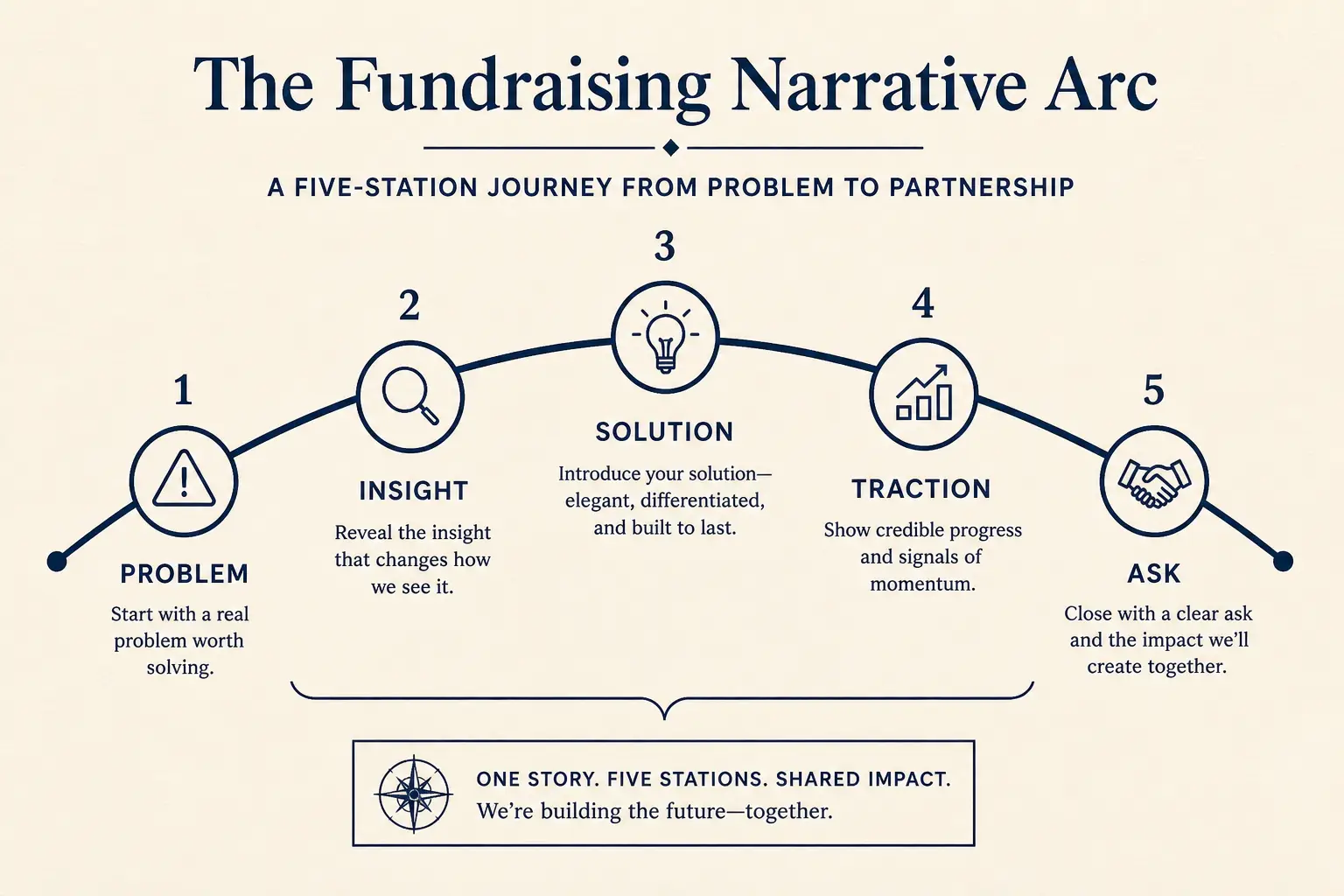
Fundraising narrative arc
Tension early. Proof before the ask. Titles should skim as a story.
Pitch vs board vs update
- Pitch, Narrative wedge and ask for people who do not know you yet.
- Investor update — Scorecard + narrative for people who already committed attention or capital.
- Board deck, Governance, decisions, and deep dives; not a fundraising storyboard.
Reusing pitch slides as a board deck usually looks like marketing in a fiduciary room. Reusing board density as a cold pitch usually puts people to sleep. Deep dive: board vs pitch.
Slide density spectrum
Sparse
Live stage
1 claim, huge type
Balanced
Default
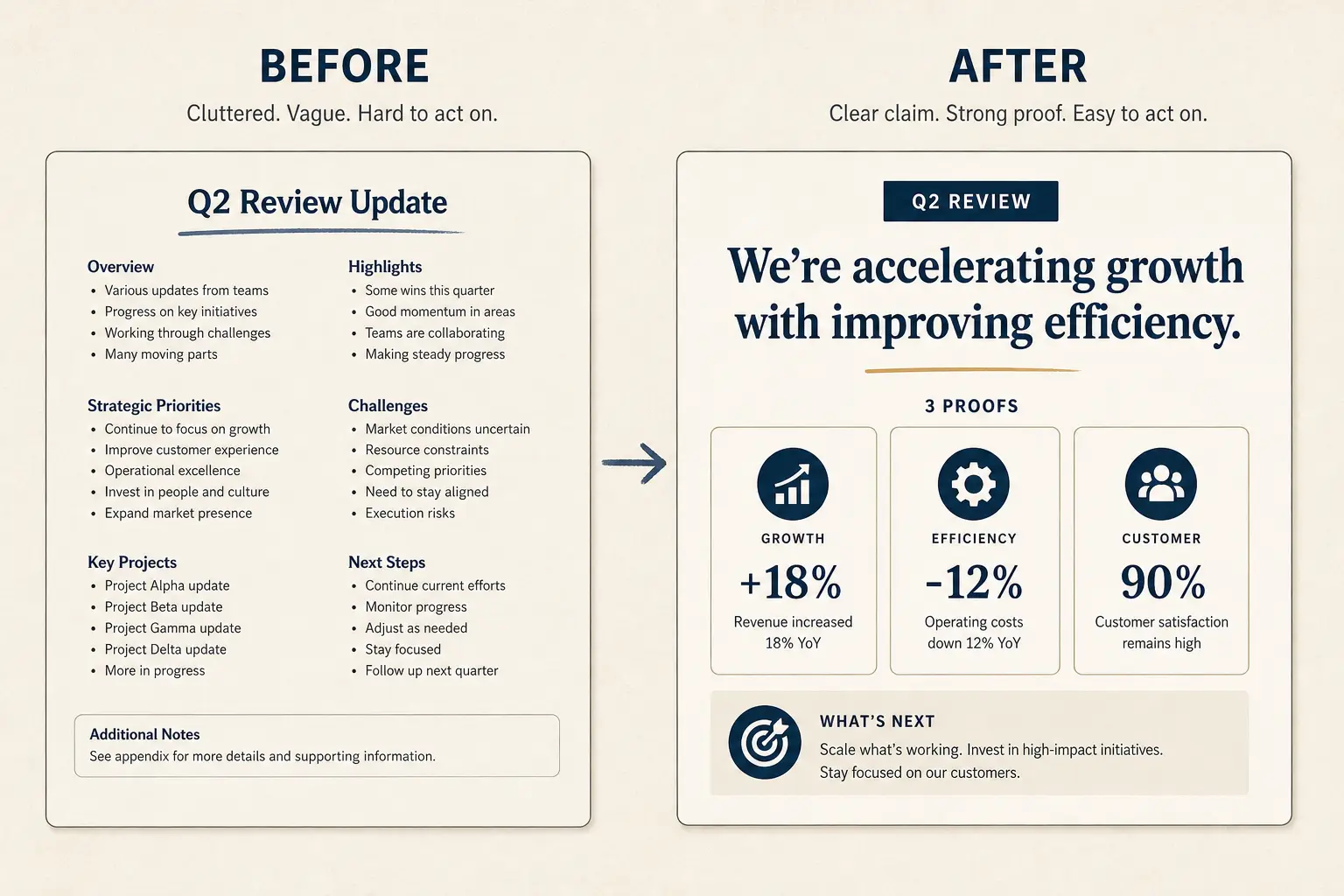
Claim + 3 proofs
Dense
Leave-behind
Detail for async read
Investor updates that get read
Monthly or bi-monthly beats irregular essays. Lead with highlights and lowlights, show the same metric spine each time, explain deltas, state risks early, and end with clear asks (intros, hires, customers, advice). Vanity positivity without risks trains investors to skim. Keep metric definitions stable, silent rebases destroy trust faster than misses.
Data room vs deck
The deck opens the door; the data room answers diligence. Do not cram the data room into the pitch. Link out. Keep the core narrative short enough to present live. When AI drafts an update or pitch, verify every number against the same source-of-truth sheet you put in the room, see data room vs deck.
Which tool for which job
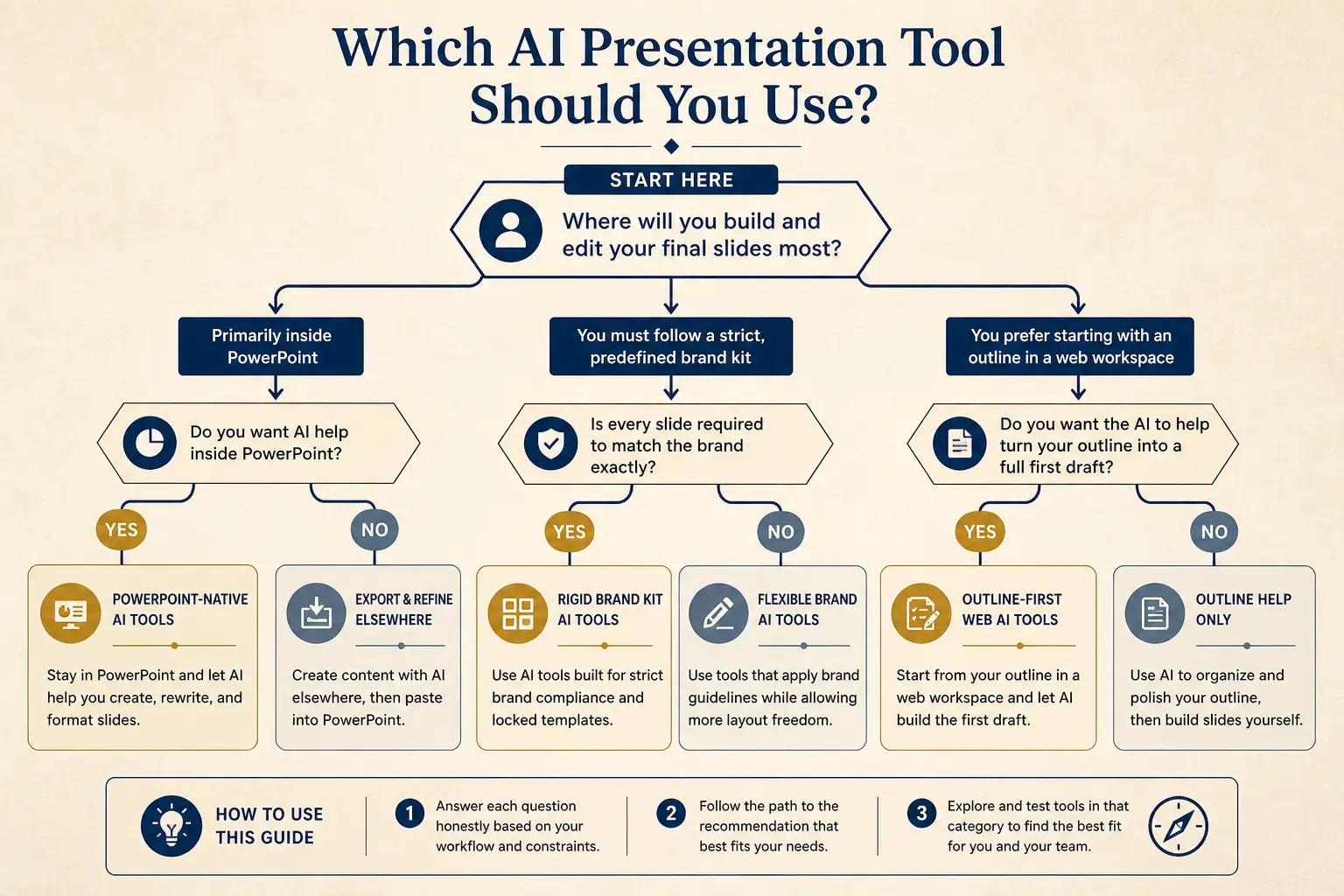
Need native PowerPoint editing every day?
Yes → Plus AI / Copilot · No → continue
Need rigid brand kits across a large team?
Yes → Beautiful.ai / enterprise kits · No → continue
Need outline-first AI drafting + present link?
Yes → Gamma
Framework: the monthly scorecard spine
Lock five to seven metrics with definitions. Every update uses the same order. Narrative explains deltas only. Asks split into capital vs advice so readers can respond in one email hop. AI may draft prose; humans paste numbers from the sheet before send. Related: presenting MRR growth.
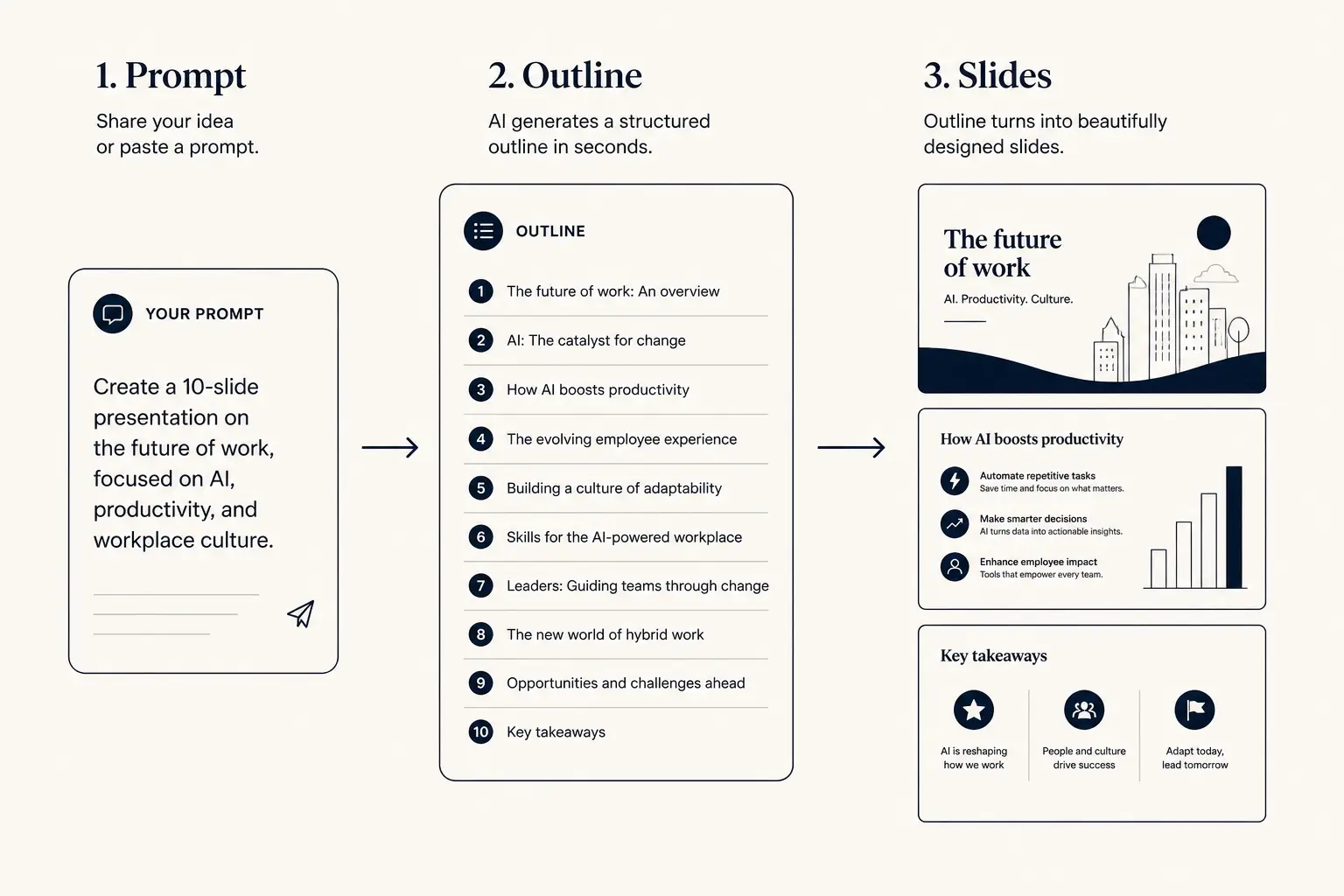
Prompt → outline → slides
1. Prompt
Audience, goal, length, proof you already have.
2. Outline
- • Opening claim
- • Proof beats
- • Ask / next step
3. Slides
Worked example: post-SAFE monthly update
After a SAFE round, the story shifts from “why invest” to “how we use the plan.” Update opens with one win (design partner expansion), one miss (sales cycle slipped), cash and runway, hiring ask for a founding AE, intro ask for two named logos. Board deck later that month goes deeper on hiring decision, not a recycled pitch arc. See SAFE note deck updates.
Checklists by stage
Pre-seed emphasizes insight, wedge, and early signal. Seed adds motion and initial retention. Series A demands repeatability. Use stage-appropriate asks; a pre-seed deck promising enterprise domination without a wedge reads as confusion, not ambition. Start with the pre-seed checklist.
Time-to-usable-deck
Blank PPT path
Outline in docs → design fight → rebuild → 3–8 hours
Outline-first AI path
Prompt → edit outline → generate → polish → minutes to first usable draft
Failure modes
- Pitch storytelling inside board packets
- Metric definitions that drift without disclosure
- Asks too vague to act on
- Data room stuffed into the live narrative
- Silence after a miss, which is also a signal
Not for you if…
You need legal docs, not slides. You want AI to invent traction. You are preparing a classroom talk, use the education hub. For cold pitch craft depth, prefer the pitch hub; this hub is the cadence around the raise.
Frameworks, worked rules, and cuts
Fundraising communication is a cadence, not a single pitch night. You need a deck that opens meetings, updates that keep believers informed, and board materials that survive scrutiny. Mixing those artifacts confuses investors and founders. Cold pitch sells wedge. Updates sell plan truth. Boards sell decisions.
Original framework: Monthly Scorecard Spine. Lock five to seven metrics with definitions. Every update uses the same order. Narrative explains deltas only. Asks split into capital versus advice so readers can respond in one email hop. AI may draft prose; humans paste numbers from the source-of-truth sheet before send. Silent metric rebases destroy trust faster than misses.
Worked example: after a SAFE round, the monthly update opens with one win on design partner expansion, one miss on sales cycle slip, cash and runway, a hiring ask for a founding AE, and intro asks for two named logos. The board deck later that month goes deeper on the hiring decision rather than recycling a pitch arc. Post-raise communication shifts from why invest to how we use the plan.
Pitch versus board versus update is a hard separation. Pitch is for people who do not know you yet. Updates are for people who already committed attention or capital. Board decks are governance artifacts. Reusing pitch slides in a fiduciary room looks like marketing. Reusing board density in a cold pitch puts people to sleep.
The deck opens the door; the data room answers diligence. Do not cram the data room into the live narrative. Verify every AI-drafted number against the same sheet you put in the room. Specific asks beat help however you can. Name person types, company lists, or decisions needed so replies can happen in one hop.
Failure modes include pitch storytelling inside board packets, drifting metric definitions, vague asks, data room stuffed into the core deck, and silence after a miss. Silence is also a signal. Stage checklists matter: pre-seed sells insight and wedge; Series A sells repeatability. Match the artifact to the stage and room.
Not for you if you need legal documents rather than slides, if you want AI to invent traction, or if you are preparing a classroom talk. Use the pitch hub for cold narrative craft. Use this hub for cadence around the raise. Cap tables and SAFE docs belong with counsel, not in a slide generator.
Concrete next step in Gamma: lock your scorecard definitions, draft this month's update from highlights, lowlights, risks, and two specific asks, then present or send as PDF with numbers pasted from the sheet. Keep the same spine next month so exceptions stay visible and readers stop hunting for which definition changed.
Board packets need decision framing: what needs a vote or guidance, what evidence supports it, and what happens if you wait. Replace seed-style why-now theater with fiduciary clarity. If hiring is the decision, deepen org design and cash impact rather than restating the company mission for the tenth time.
Investor updates earn trust when lowlights arrive with cause and corrective action in the same breath as the metric. Do not bury misses under a green ARR arrow. If a metric definition must change, say so explicitly in the first paragraph so readers do not reverse-engineer a silent rebase.
SAFE-note and post-close communication should shift vocabulary from raise narrative to plan execution. Intro asks should name logos or person types, not networking generally. Capital asks should state amount and use; advice asks should state the decision you need help making this month.
When comparing AI tools for fundraising cadence, score Honesty and Editability on a forced metric rewrite across two months of the same spine. A tool that looks great on a one-off pitch but fights scorecard consistency will fail the update job even if Design scores high.
Pre-seed checklists overweight insight, wedge, and early signal over polished GTM slides. If you paste a Series A template into a pre-seed raise, you will invent empty repeatability. Cut until the narrative matches the proof you can defend this month.
Data-room versus deck is a sequencing rule: narrative first, diligence second. Link the room from a single slide; do not paste contracts into the live arc. When AI drafts a diligence dump into the core deck, move it behind the ask and verify every figure against the sheet.
SAFE-stage updates should mention instrument only when it changes reader behavior. Most months need scorecard truth and asks, not another explanation of how SAFEs work. Save instrument detail for new angels who have not seen the prior note.
Board versus update timing: send the short update on the cadence; deepen the board pack when a decision needs a vote. Recycling the update into a board deck without adding decision framing wastes director time and signals weak governance hygiene. Write the decision question on slide one before you generate visuals. Keep that sentence human-owned even when Gamma drafts the rest.
Draft your next investor-facing deck
Keep the metric spine honest, Gamma helps you structure the story around it.