Templates
AI presentation templates with narrative built in
Gamma templates start from argument structure—pitch, sales, product review—not from decorative theme packs. Pick the job, fill the brief with real proof, approve the outline, then edit slides you can present or export. Speed without a spine is just faster slide soup.
Who these AI presentation templates are for
Use templates when you already know the meeting type and need a proven spine faster than a blank canvas. They fit founders raising, sellers following up after discovery, and product leaders running decision reviews. If you are still learning craft, pair templates with examples and Learn hubs rather than treating a template as a substitute for judgment.
- Founders who need an investor-recognizable pitch spine immediately.
- Sellers who want a discovery-mapped follow-up structure on demand.
- PMs who run recurring ship/hold reviews and need a stable decision arc.
- Teams standardizing quality without freezing every pixel in a brand kit.
Not for you if…
Skip templates if you do not know the job—take the quiz first or write a brief from scratch. Skip if you need locked brand masters as the primary constraint. Skip if you will accept every generated section without numbers. And skip forcing pitch or sales templates onto teaching talks; use a teaching-oriented outline instead.
What deck are you actually making?
Three questions. One recommended path, no generic “it depends” fog.
Pick a template by job
Pitch deck template
Investor-recognizable spine from problem through ask—edit proof before you present.
Sales deck template
Discovery-mapped B2B structure with wedge, proof, and a concrete next step.
Product review template
Decision-ready exec review: scorecard, evidence, risks, and ship/no-ship ask.
Annotated examples
Browse example decks that show structure patterns you can steal with judgment.
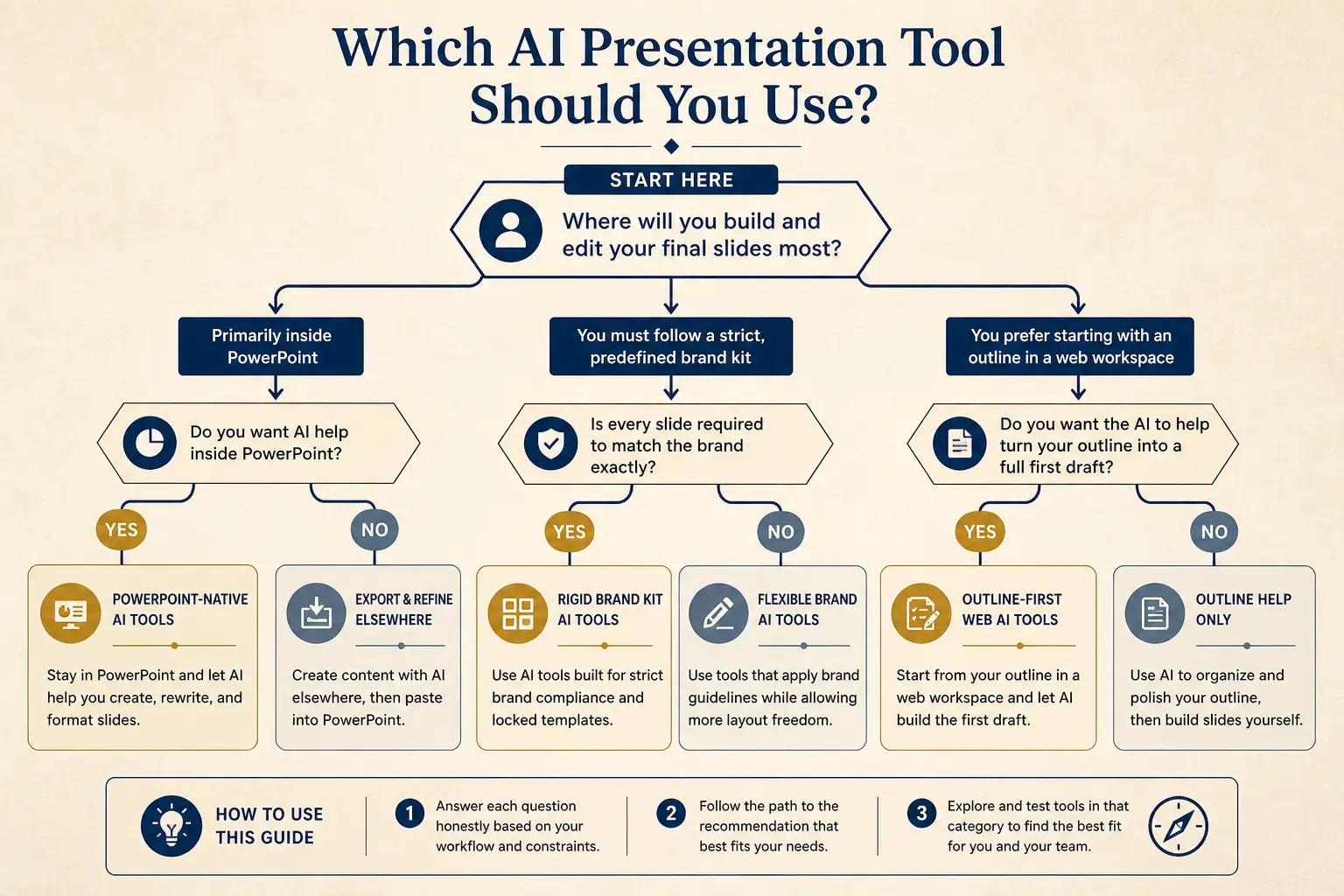
Which tool for which job
Need native PowerPoint editing every day?
Yes → Plus AI / Copilot · No → continue
Need rigid brand kits across a large team?
Yes → Beautiful.ai / enterprise kits · No → continue
Need outline-first AI drafting + present link?
Yes → Gamma
The SPARK test before you open a template
SPARK is a sixty-second gate: Stakeholder in the room, Purpose decision, Artifact channel, Real proof available, Known omissions. If Purpose is fuzzy, a template will only pretty-print confusion. If Real proof is missing, you will ship hollow claim slides. Write SPARK, then choose pitch, sales, or product review.
- Stakeholder, roles and skepticism you must address.
- Purpose, the decision or next step you need.
- Artifact, present link, PPTX leave-behind, or both.
- Real proof, metrics, quotes, logos you can defend today.
- Known omissions, topics that belong in appendix or never.
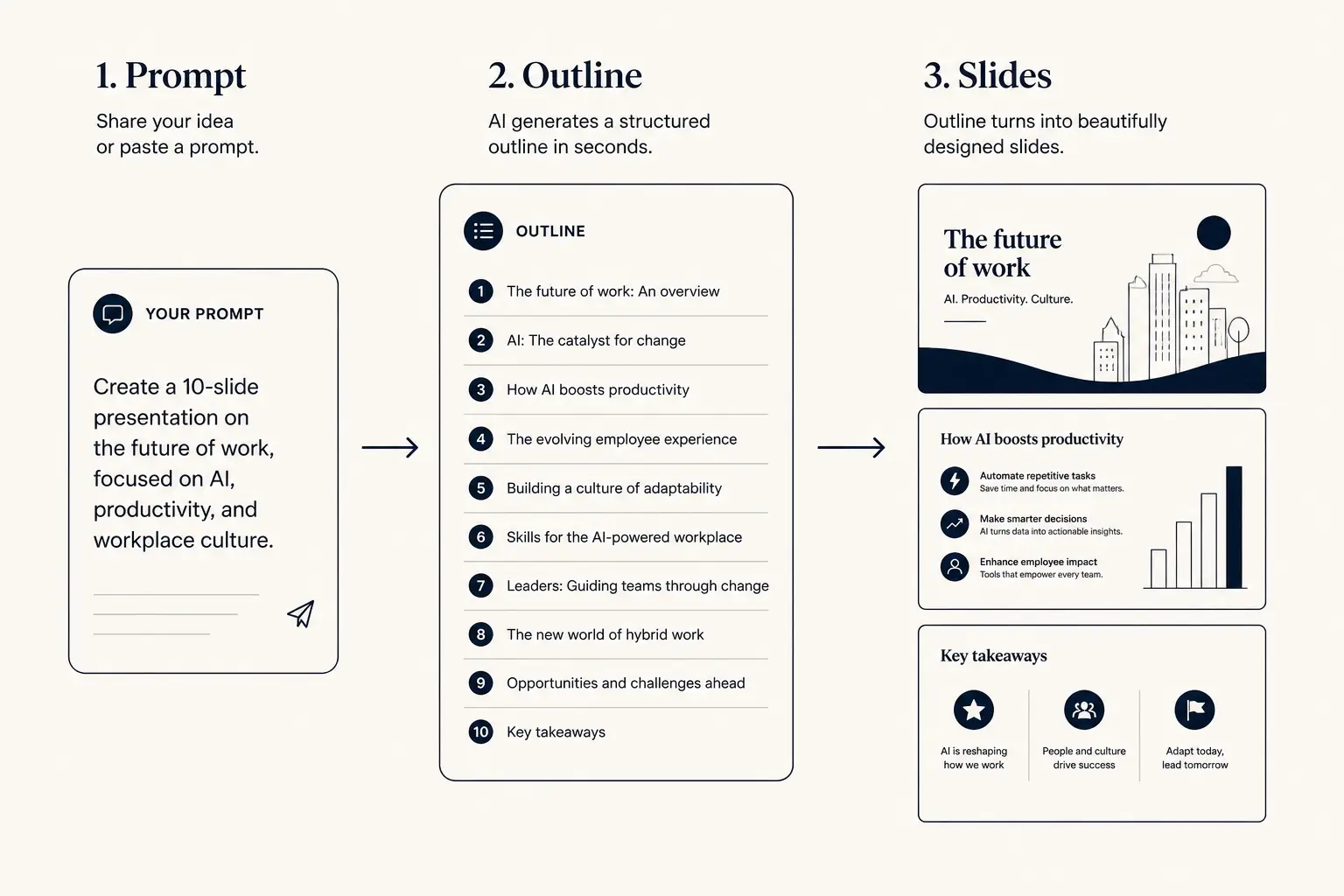
Prompt → outline → slides
1. Prompt
Audience, goal, length, proof you already have.
2. Outline
- • Opening claim
- • Proof beats
- • Ask / next step
3. Slides
Outline preview
- Narrative, open with Start from a seed pitch template:
- Body, 3–5 slides that carry the argument
- Close, summary, risks, and the ask
Preview only, Gamma expands this into editable slides.
Slide budgets still apply to templates
A template default is not a meeting plan. Set minutes and stakes, then cut sections that do not fit the live path.
Slide budget calculator
Get a realistic slide count from meeting length and stakes, then open a matching prompt in Gamma.
18
Total slides
13
Core narrative
5
Appendix
Create a 18-slide deck for executives who skim. Meeting length: 15 minutes. Stakes: high. Use an outline-first structure with 13 core narrative slides and 5 appendix slides. Every slide needs one claim and proof.
Open this budget in GammaWorked example: choosing wrong, then right
Wrong: a founder uses a pitch template for a mid-market sales evaluation because it looked polished. The deck opens with TAM theater, buries the buyer’s discovery pains, and closes with a fundraising-style ask. The champion cannot forward it to procurement. Right: same founder runs SPARK, picks the sales deck template, restates pains in buyer language, attaches ROI inputs from the call, and closes with a technical validation meeting next Tuesday. Same product, different job, different spine.
Second case: a PM opens a sales template for an internal ship decision. Feature benefits read like marketing. Right move: product review template with scorecard, risks, options, and a binary ask. Templates are leverage only when the job match is honest.
| Job | Template | Closing ask pattern |
|---|---|---|
| Raise capital | Pitch deck template | Amount, runway, use of funds, milestones |
| Advance a deal | Sales deck template | Dated meeting, attendees, success criteria |
| Ship or hold | Product review template | Options table with recommendation and owner |
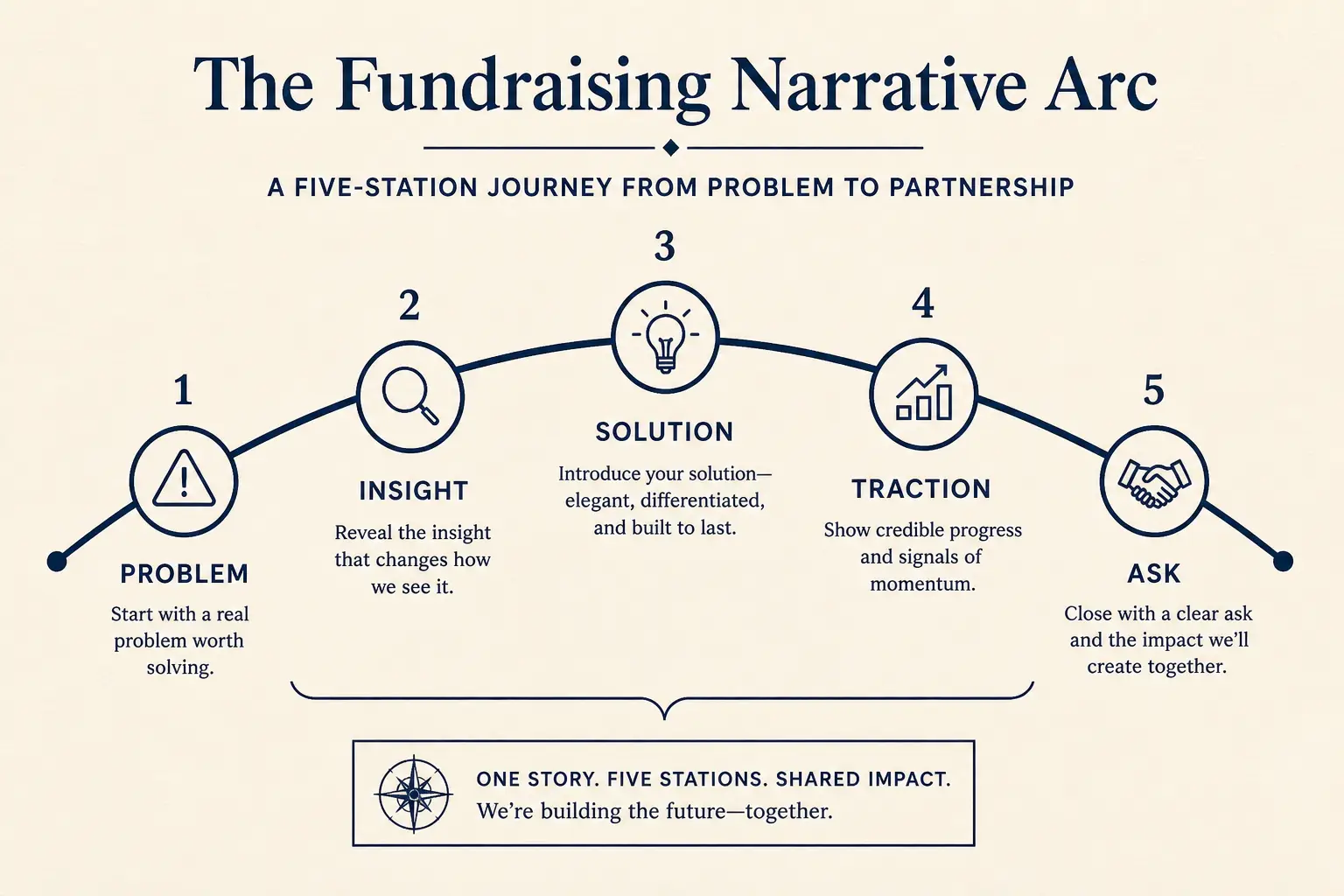
Fundraising narrative arc
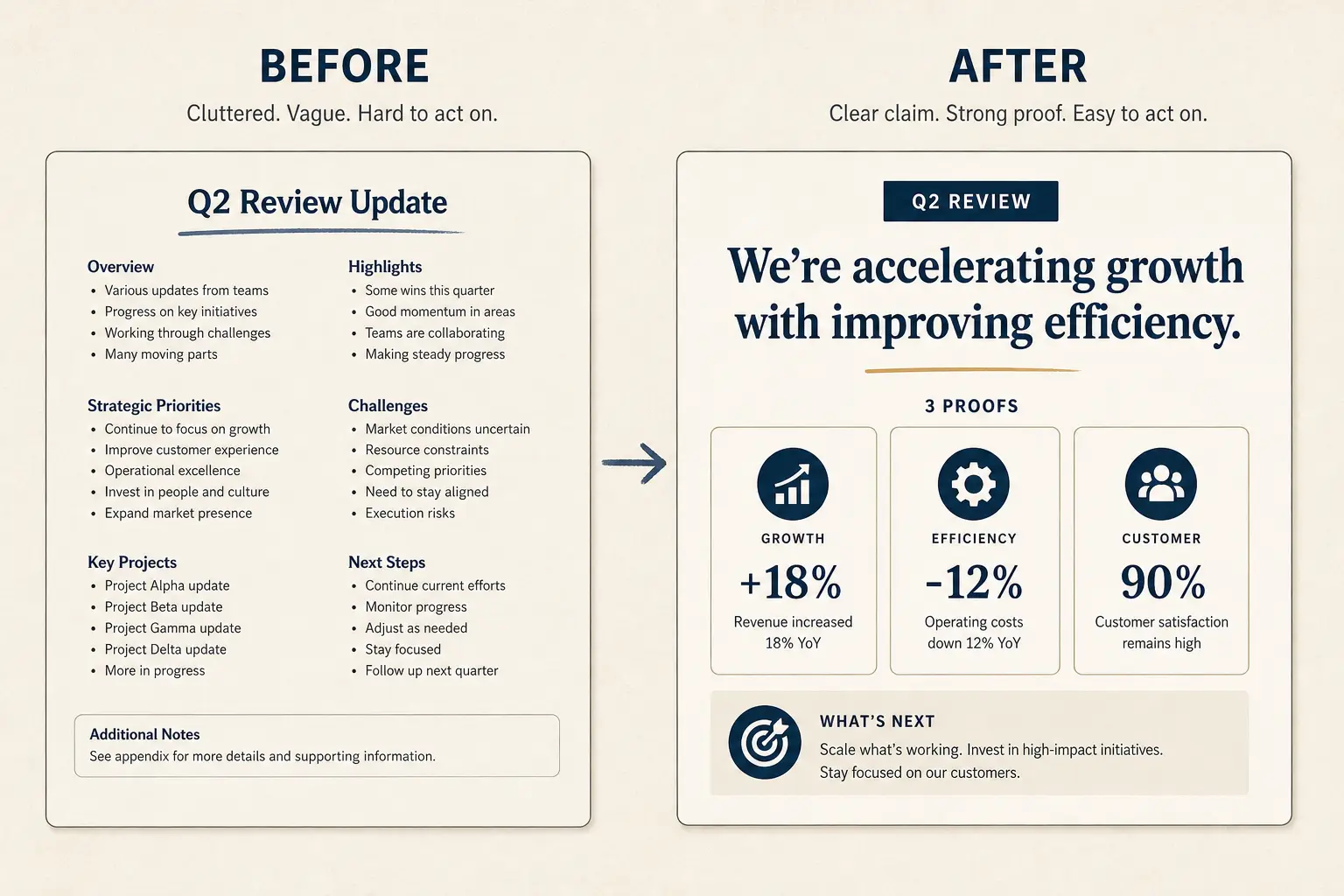
Tension early. Proof before the ask. Titles should skim as a story.
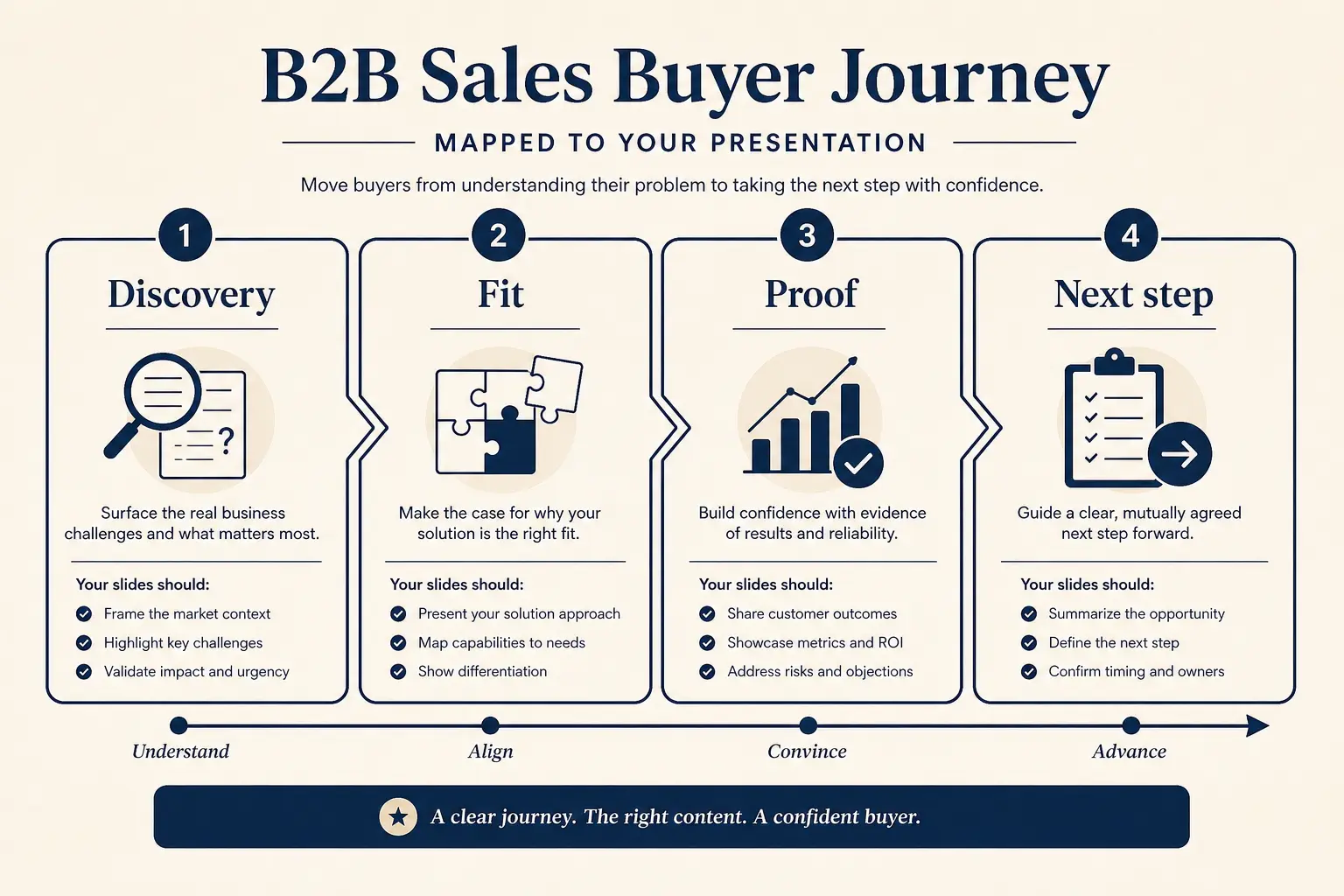
Buyer journey → slide map
Discovery
Pain + stakes
Fit
Why you win
Proof
ROI / risk
Next step
Clear ask
How to fill any Gamma template
- Write SPARK in five sentences.
- Open the matching template path and paste proof.
- Edit outline titles into claims; delete tourism sections.
- Generate slides; attach numbers; rewrite the ask.
- Present or export based on Artifact from SPARK.
Evaluation rubric axes
Present, export, and related tools
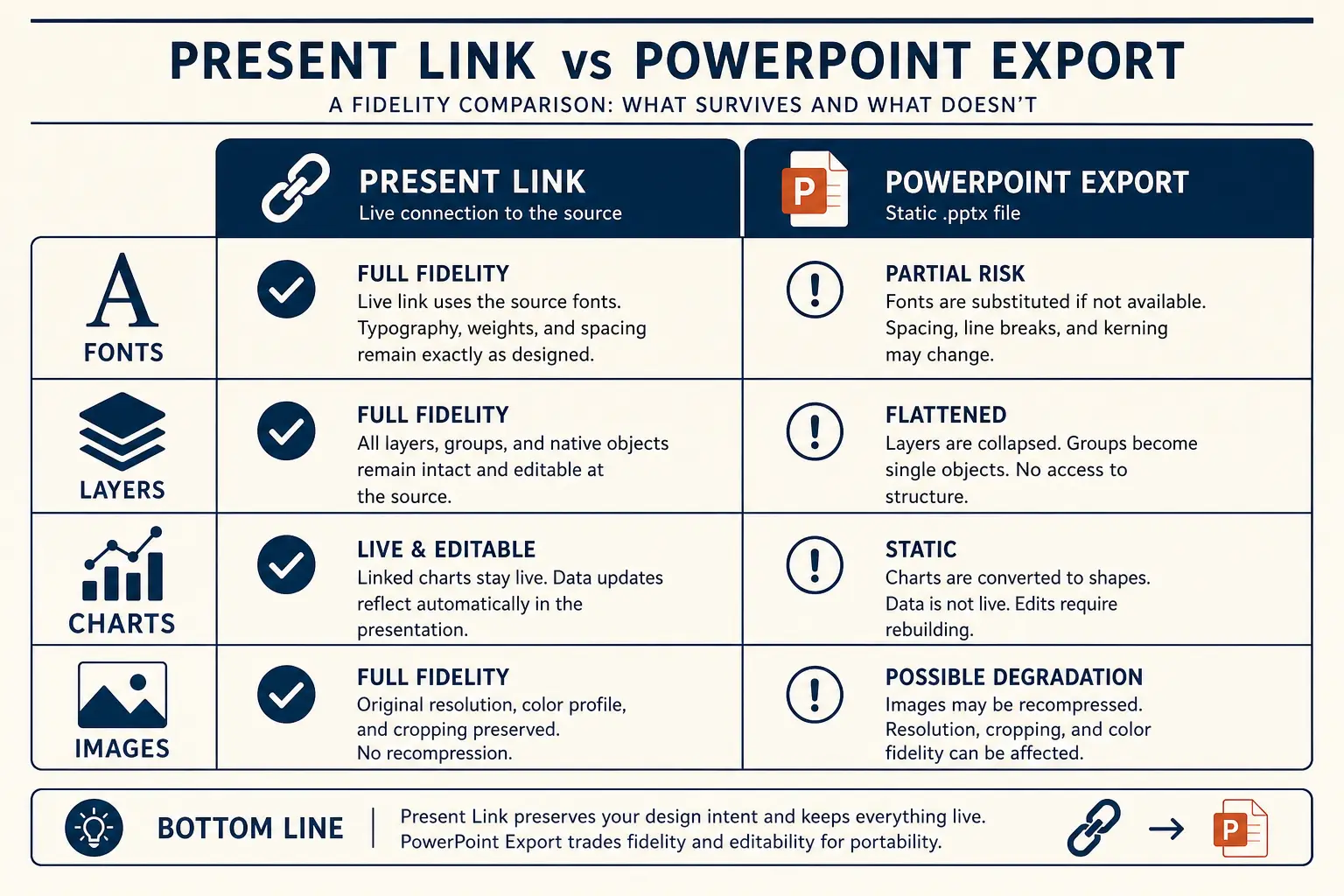
Templates do not choose your channel. Present from a link when you can; export PPTX when processes demand a file—see export to PPTX. Broader AI presentation maker craft lives on the product money page. Step-by-step ritual on create a presentation with AI. Compare and Method help when you are still evaluating software rather than filling a spine.
Present link vs PPTX fidelity
Present link
- • Live latest edits
- • Best for your room
- • Analytics-friendly
Export PPTX / PDF
- • Offline / procurement
- • Brand review in PPT
- • Expect cleanup passes
Failure modes with templates
- Picking a familiar spine for the wrong job because it looked polished.
- Accepting every section without attaching real proof.
- Treating decorative themes as a substitute for SPARK.
- Letting template defaults dictate eighteen slides for a ten-minute room.
- Mixing pitch asks into sales evaluations or ship reviews.
- Never deleting sections—templates are leverage, not scripture.
- Skipping examples and Learn guides, then repeating structural mistakes.
- Forcing teaching talks into fundraising or sales spines.
Open the pitch deck template, sales deck template, or product review template next. Study annotated examples when you need judgment more than speed. When the job is document conversion, use document to presentation after SPARK still holds.
Governance for template libraries
A template library without governance becomes a junk drawer. Assign an owner for each spine—pitch, sales, product review—and review quarterly whether the default sections still match how your best meetings run. If sellers consistently delete three sections, remove them from the default rather than forcing every AE to perform the same cut.
Teach SPARK in onboarding before you teach themes. New hires who learn aesthetics first will fill templates with hollow slides that look finished. New hires who learn stakeholder, purpose, artifact, real proof, and omissions will use AI presentation templates as leverage. Pair each template with one annotated example that shows a strong fill and a weak fill.
Measure template quality with job outcomes, not generation counts. For pitch, track whether ask slides include use of funds. For sales, track whether discovery language appears in titles. For product review, track whether options and owners appear. These checks are lightweight and prevent AI speed from industrializing bad structure.
Keep teaching paths separate. Classroom and workshop decks rarely belong on fundraising or sales spines. Point educators to create a presentation with AI and the education hub. Point operators converting docs to document to presentation after SPARK. The templates hub should route people, not trap them in the wrong arc.
When brand kits matter, document the handoff. Narrative templates solve argument structure. Locked masters solve compliance packaging. Teams get into trouble when they expect one artifact to do both jobs perfectly. Write the split into your internal playbook: draft in Gamma templates, package in the mandated system when required, export with HANDS habits if files are needed.
Refresh prompts stored beside templates. Market language changes. Product names change. Security claims change. Stale prompt examples inside a template library silently train people to generate outdated decks. Quarterly prompt hygiene is as important as visual refresh.
Finally, allow escape hatches. If a meeting is weird, blank outline-first drafting may beat a familiar spine. Templates are defaults for known jobs, not religion. The deck job quiz exists to route edge cases. Celebrate deletion. A team that never deletes template sections is not disciplined—it is afraid.
Publish an internal one-pager that maps jobs to templates with three examples of wrong picks. Wrong picks are more educational than abstract rules. When people see a pitch spine misused in a sales evaluation, they understand SPARK faster. Pair that one-pager with the deck job quiz on this page for self-serve routing.
Allow power users to fork templates for segment-specific needs, but require a sunset date and an owner. Eternal forks become competing sources of truth. AI presentation templates should converge on a small set of excellent spines rather than sprawl into twenty near-duplicates that nobody maintains.
Connect billing and export expectations in training. Teams that draft from templates then discover they need PPTX the night before a customer send create avoidable fire drills. Mention Plans and export to PPTX during template onboarding so channel choice is conscious from the first fill.
Frequently asked questions
Start from the spine that matches the room
Open Gamma with SPARK written down. Pick pitch, sales, or product review—then edit until the titles tell the truth.