Compare · Fundraising
Best AI pitch deck generators in 2026
The best AI pitch deck generator is the one that produces an investor-recognizable narrative you can still edit the night before the meeting. This shortlist ranks tools for fundraising jobs, seed through Series A, using the public rubric on the method page, with Structure and Editability weighted higher because those axes kill raises when they fail. We build Gamma. We still write choose-them sections when Beautiful.ai, Plus AI, or Pitch fits the constraint better. Pricing claims are dated as of Aug 2026, verify on vendor sites. If you only need a logo to put on a procurement slide, you are using this page wrong, use the quiz and the forced-edit protocol instead.
Method:/method. General makers:best AI presentation makers. Product:AI pitch deck generator.
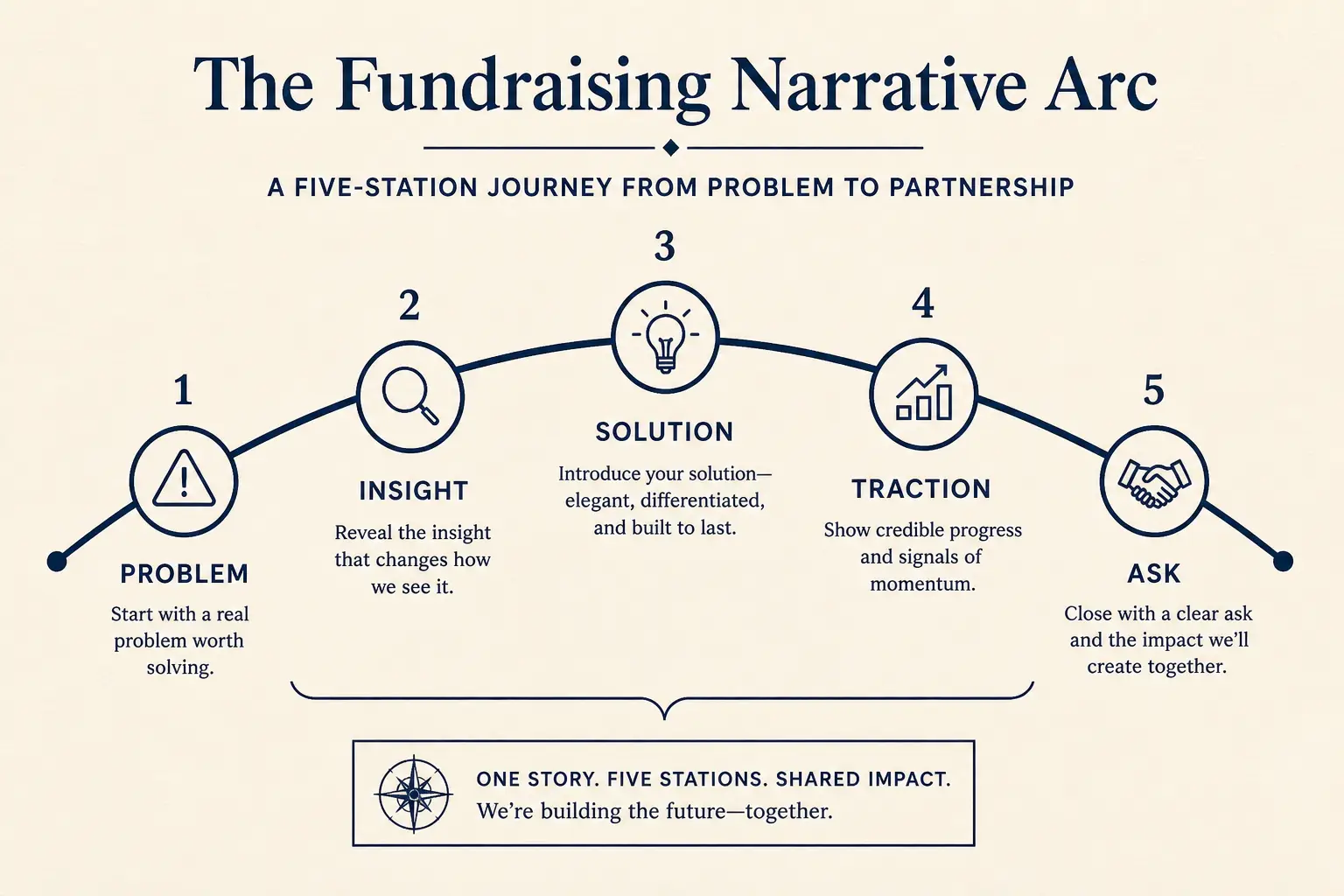
Fundraising narrative arc
Tension early. Proof before the ask. Titles should skim as a story.
How we ranked for fundraising
Fundraising protocol: a twelve-slide seed or Series A brief with problem, wedge, market, traction, team, and dated ask. Happy-path generate, then forced reorder moving traction ahead of market and a metric rewrite on ARR or waitlist. Score Structure and Editability at 1.5×; Design, Export, and Honesty at 1×, disclosed weighting for this page only. Present link and PPTX paths both scored when relevant. Definitions on the method page. Invite one skeptical operator to run the brief so scores reflect your median teammate, not your best storyteller.
Investor Arc Stress Test
Original framework, the Investor Arc Stress Test. Titles must skim as problem, insight, solution, traction, ask without speaker notes. If a non-founder cannot retell the arc in ninety seconds, Structure fails. If a metric swap requires regenerating the whole deck, Editability fails. If export corrupts the ask slide, Export fails for file-first processes. Design polish never rescues a missing ask. Use this test before you trust any generator homepage. Write the failure mode on a sticky note before you open any vendor homepage; otherwise marketing will redefine your problem for you.
Evaluation rubric axes
Outline preview
- Narrative, open with Seed pitch, 11 slides: problem, insight,
- Body, 3–5 slides that carry the argument
- Close, summary, risks, and the ask
Preview only, Gamma expands this into editable slides.
Fundraising shortlist
Fundraising-weighted editorial ranking as of August 2026. General presentation ranking lives on Best AI presentation makers. Gamma leads outline-first seed drafts in our tests; file-native and kit tools win when those constraints bind.
| Tool | Structure | Edit | Export | Best when |
|---|---|---|---|---|
| Gamma | 5 | 5 | 3 | Outline surgery on seed/Series A arcs |
| Plus AI | 3 | 4 | 5 | Native PPTX working files required |
| Beautiful.ai | 3 | 3 | 4 | Brand kit locked; story already approved |
| Pitch | 4 | 4 | 4 | Multiplayer fundraising teams |
| Copilot | 3 | 4 | 5 | Already in M365 PowerPoint daily |
| Canva | 3 | 3 | 4 | Light visual pitches; weaker diligence arcs |
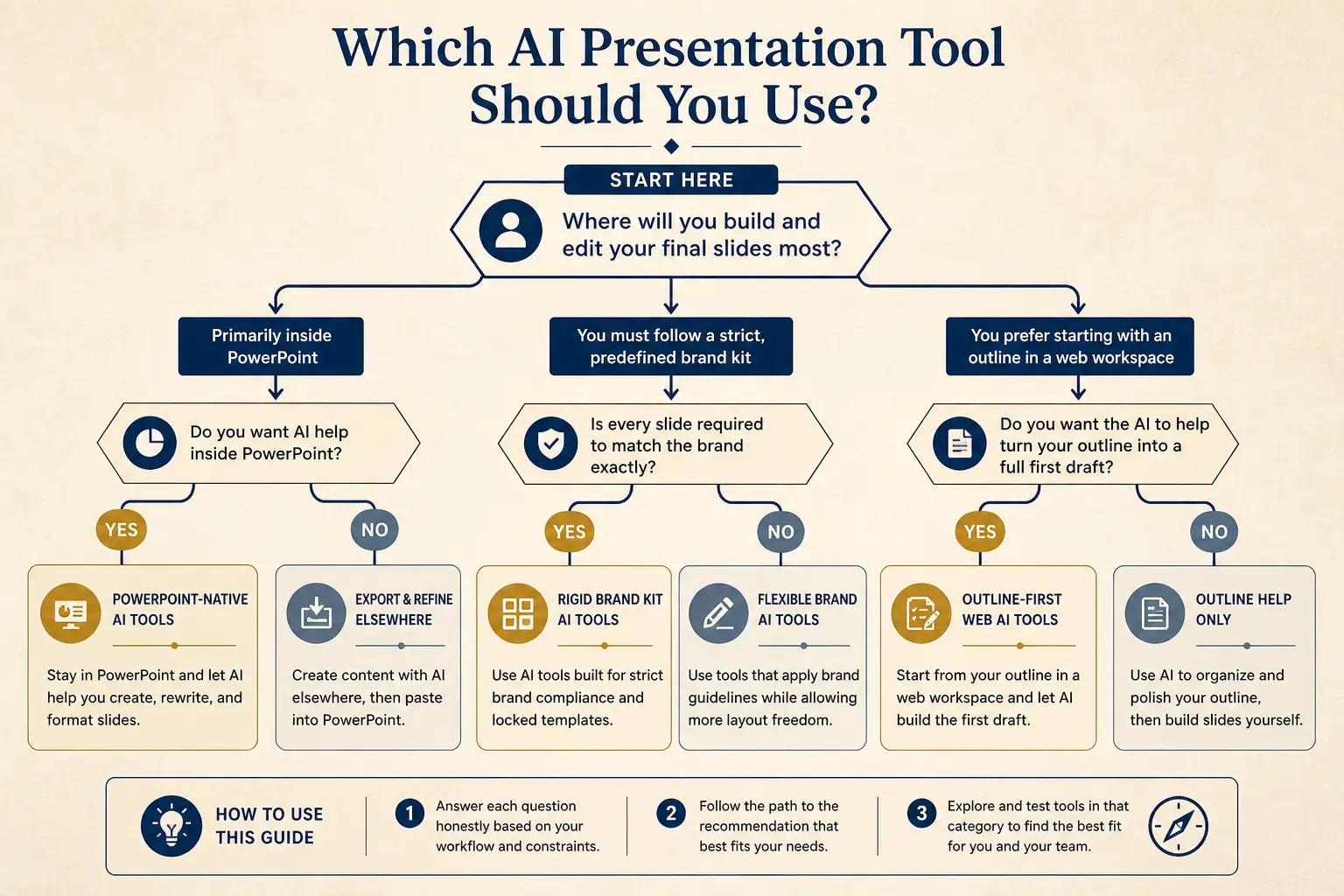
Which tool for which job
Need native PowerPoint editing every day?
Yes → Plus AI / Copilot · No → continue
Need rigid brand kits across a large team?
Yes → Beautiful.ai / enterprise kits · No → continue
Need outline-first AI drafting + present link?
Yes → Gamma
Choose Gamma if…
Choose Gamma when the arc still moves weekly; when claim titles need surgery before partner meetings; when present link or PDF covers most investors; and when you want outline-first generation that keeps the ask editable. Choose Gamma for most seed decks and many Series A drafts that are still narrative-constrained rather than kit-constrained.
Choose another generator if…
Choose Plus AI or Copilot when investors demand native PPTX working files with zero cleanup tolerance. Choose Beautiful.ai when brand kits are mandatory and the story is already approved. Choose Pitch when a multi-founder team needs collaboration analytics more than solo outline speed. Choose staying in PowerPoint when AI is optional and a banker already owns the file.
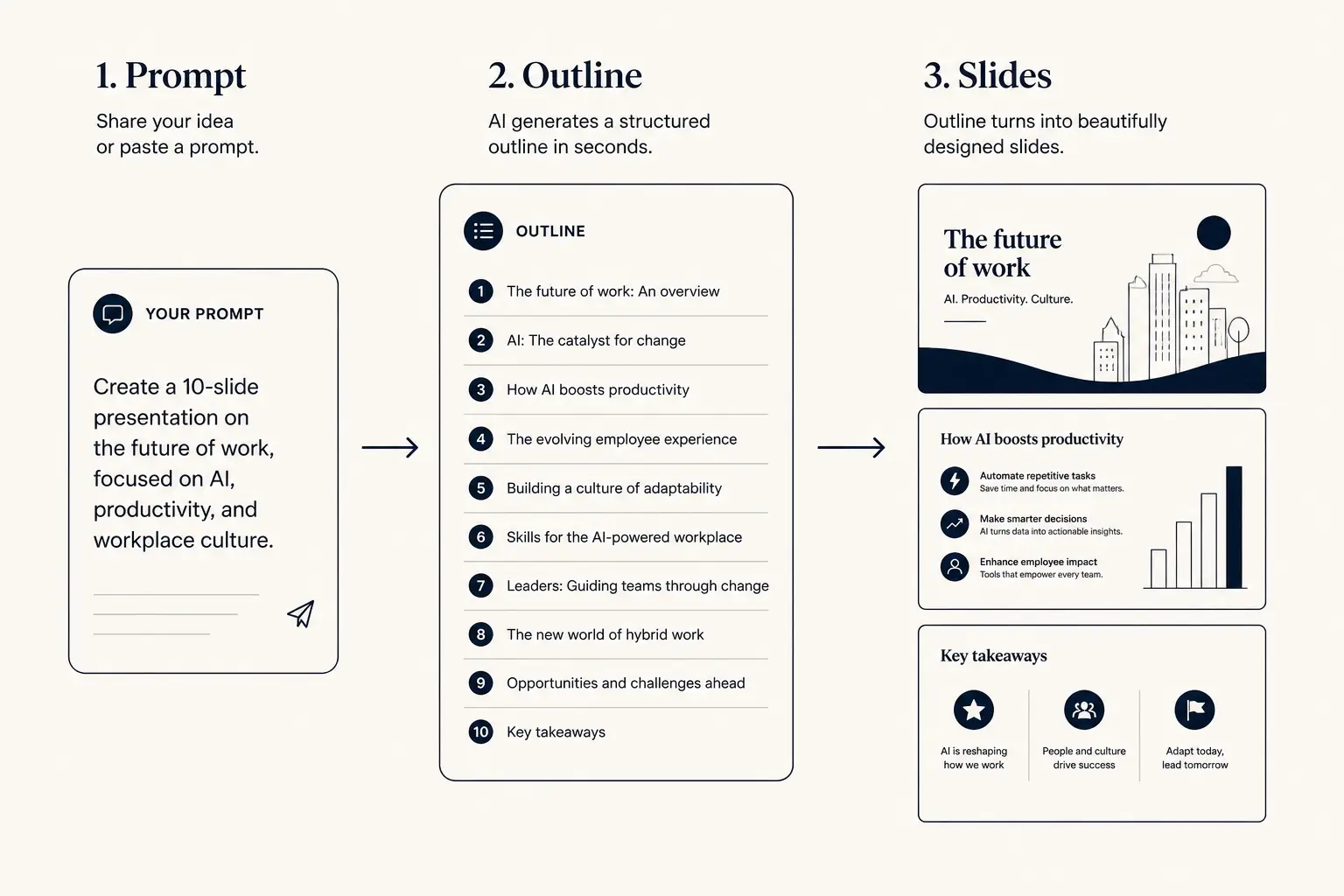
Prompt → outline → slides
1. Prompt
Audience, goal, length, proof you already have.
2. Outline
- • Opening claim
- • Proof beats
- • Ask / next step
3. Slides
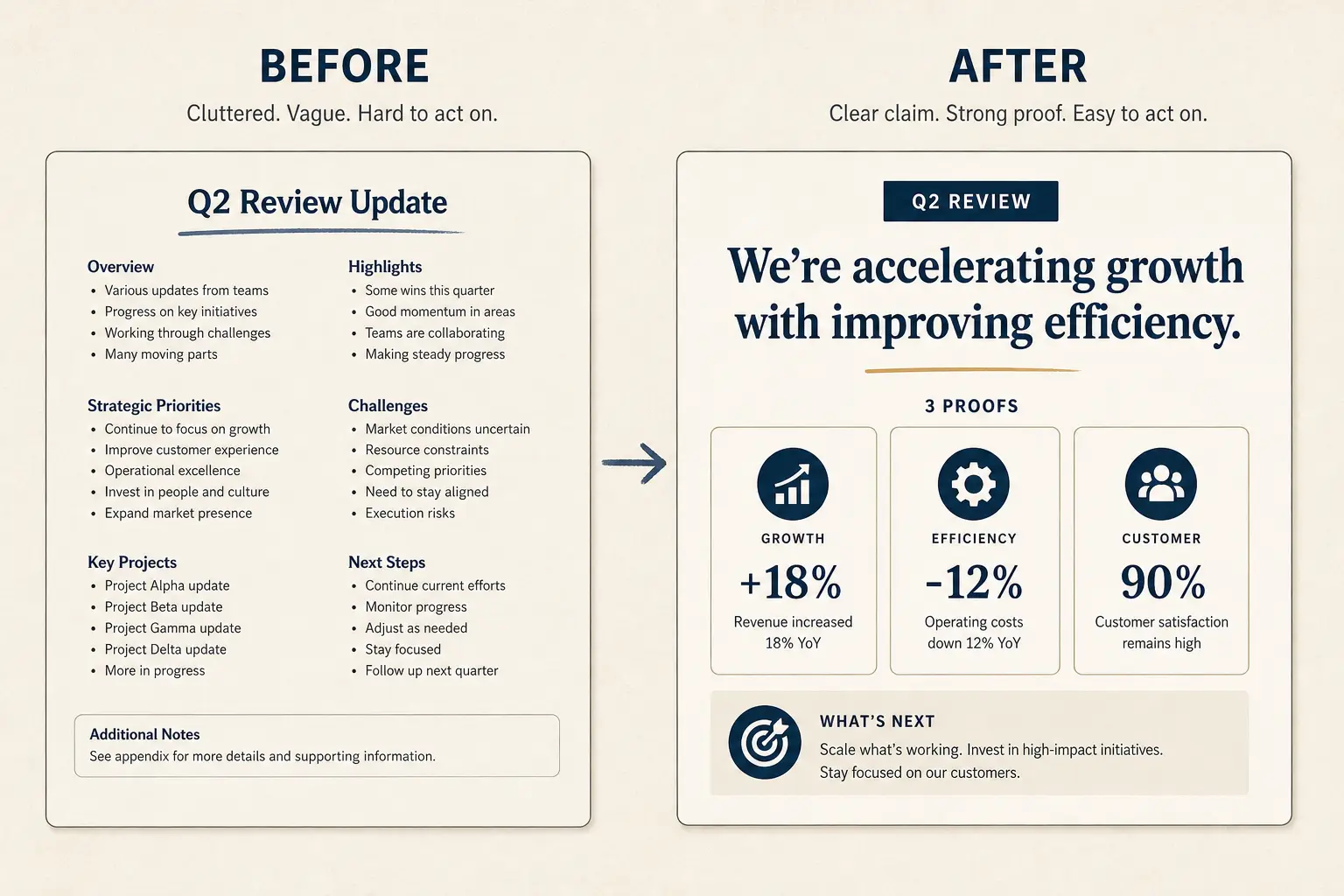
Weak slide → strong slide
Before
- • Overview
- • Features
- • Next steps???
After
- • Cost of status quo
- • Wedge in one claim
- • Proof + decision ask
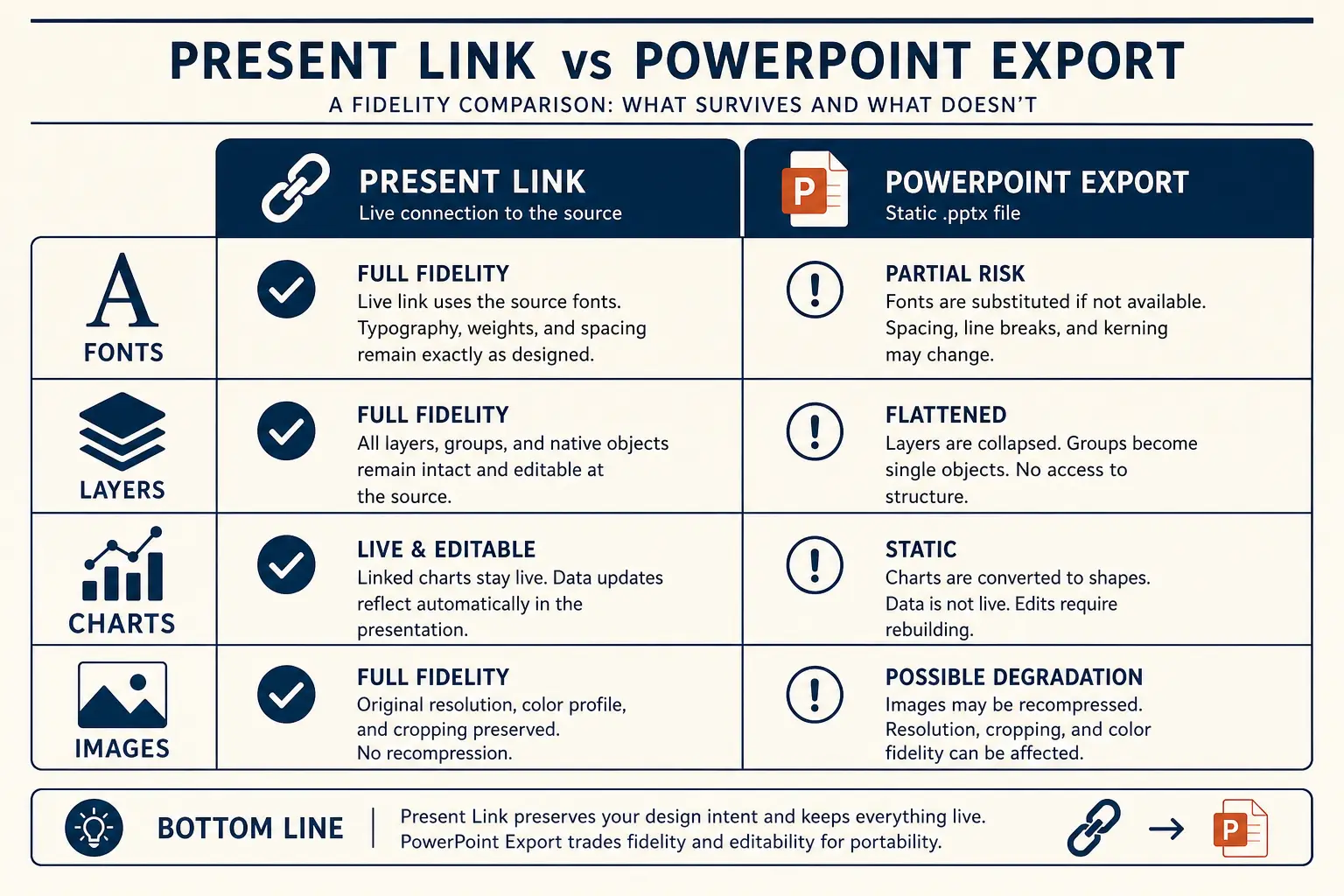
Present link vs PPTX fidelity
Present link
- • Live latest edits
- • Best for your room
- • Analytics-friendly
Export PPTX / PDF
- • Offline / procurement
- • Brand review in PPT
- • Expect cleanup passes
Time-to-usable-deck
Blank PPT path
Outline in docs → design fight → rebuild → 3–8 hours
Outline-first AI path
Prompt → edit outline → generate → polish → minutes to first usable draft
Anatomy of a claim slide
Claim headline (one idea)
Supporting line that states the so-what for this audience.
Source / footnote
Worked examples
Worked example: a fintech seed raise with messy waitlist metrics. Founder locks titles in Gamma, pastes real numbers, forces traction before market, presents from a link to angels, exports PPTX for one fund that refuses links, budgets fifteen minutes cleanup. Arc quality holds; export tax is known. Choosing Plus AI alone would have kept file comfort but produced a weaker first arc without founder outline discipline. Measure minutes from brief to presentable arc and count how many title rewrites were required after generation.
Worked example B: Series A with design-system requirements from a corporate co-investor. Team drafts arc in Gamma, then rebuilds final visuals in Beautiful.ai for the brand review, dual-run by stage. Worked example C: venture studio that lives in Pitch for portfolio sales decks uses Pitch for collab but still runs investor arcs through Gamma when Structure fails in template mode. Job-class ranking again beats a single trophy. If dual-run feels expensive, price it against one failed board or partner meeting caused by the wrong primary tool.
Axis-by-axis reading notes
For fundraising, Structure means an investor can retell problem, wedge, traction, and ask from titles alone. Editability means the night-before metric change does not destroy the deck. Design means hierarchy that supports diligence, not pitch-theater gradients. Export means the fund that demands PPTX can open a usable file. Honesty means no invented traction and no undated pricing. Weighting Structure and Editability at 1.5× is a disclosed choice for this page because those failures end raises faster than imperfect spacing. If your process is file-first forever, reweight Export upward and expect Plus AI or Copilot to climb.
Decision matrix for buyers
Fundraising buyer matrix: outline-first seed story still moving, Gamma. PPTX-only partner process, Plus AI or Copilot. Brand-locked studio with approved narrative, Beautiful.ai. Multi-founder collaboration with analytics, Pitch. Design-suite founders making a light visual pitch, Canva, with caution on diligence depth. Data-room-heavy late stage, stop shopping generators and hire process; the deck is not the bottleneck. Pick one primary generator per raise stage and document when you switch lanes.
Procurement checklist
Founder procurement checklist for pitch generators: source-of-truth metrics sheet linked in the outline; ask slide with amount and use of funds before generation; forced reorder test; one clean PPTX open if required; pricing screenshot dated August 2026; decision on present link versus file per target fund; advisor review scheduled after titles lock, not after themes. Buying seats before titles lock is how generic AI pitch decks ship to investors who have seen a thousand of them.
Honesty constraints on this ranking
Honesty for pitch rankings means refusing invented ARR, refusing undated number-one claims, and refusing to hide when file-native tools win. We build Gamma and still recommend Plus AI when PPTX gravity dominates. If a generator's marketing implies diligence without your metrics, fail Honesty immediately. Investors punish fiction harder than imperfect design, your tool choice should encode that ethic.
How to use examples with this ranking
Use annotated examples as outcome benchmarks, not copy-paste sources. If an example deck on our examples page shows a clearer ask than your generated draft, fix titles before you switch tools. Tool rankings cannot compensate for missing proof inventory. Pair this shortlist with the examples gallery and with a live draft test in product so scores connect to artifacts you would actually present.
What to cut from your shortlist process
Cut vendors that refuse to date feature claims. Cut any bake-off without a forced edit. Cut seats that have not shipped a meeting deck in sixty days. Cut duplicate tools in the same job class unless dual-run rules are written. Cut aesthetic winners that fail Structure. Cut undated pricing from blogs. Keep one primary per job class and one documented exception path for file or kit constraints.
When to revisit the ranking
Revisit the ranking when your primary job changes, when brand ops gains veto power, when a raise starts, when Microsoft or Google changes Copilot packaging, or when export quality moves a full point in your own tests. Quarterly is a minimum cadence. Mid-raise tool switches are usually expensive, lock the generator for the raise unless a constraint truly changes.
Failure modes and what to cut
Failure modes: inventing traction with AI; generic SaaS titles that could belong to any company; asking for money without use of funds; scoring Design before Structure; exporting without opening PPTX on a clean machine; and treating undated best-of posts as diligence. Cut pads that restate fundraising clichés without a decision rule. Cut keyword stuffing around pitch deck generator synonyms. Delete any internal summary that ranks tools without naming the job, the artifact, and the date of the test.
Not for you if…
This shortlist is not for you if you need a data room, not a deck. It is not for you if you refuse to paste real metrics. Gamma is not for you if every investor requires untouched corporate PPT masters with no export path. Pick the constraint winner and keep fundraising honesty intact.
Pricing note (August 2026)
Pricing note dated August 2026, verify on vendor sites for every generator you shortlist. Confirm whether export, team seats, or AI credits sit behind higher tiers. Founders should screenshot pricing before seed extend rounds so finance can audit tool sprawl. Ignore undated blog dollar amounts entirely. Renewals are when sprawl happens, attach this page's scorecard to the renewal packet so finance sees job-class winners.
Concrete next step
Concrete next step: write a title-only arc for your raise, paste it into Gamma, generate, move traction before market, rewrite one metric from your source sheet, and present. If a fund demands PPTX, export and time cleanup. If cleanup or kit constraints dominate, choose Plus AI or Beautiful.ai for that lane. Re-score after your next round narrative change. Calendar a ninety-day re-rank when your primary job changes, for example after you hire brand ops or after you start a raise. Share the scorecard with whoever signs the card so the purchase matches the job-class winner you actually measured.
Frequently asked questions
Stress-test your investor arc
Lock titles, generate in Gamma, move traction before market, rewrite one real metric, then keep the generator that survives.