Learn · Sales
Sales presentations that close deals
A sales presentation should move a specific buyer toward a next step — not recite your website. The best decks sound like a continuation of discovery: shared pain, proof that fits their world, commercial logic, and a clear ask for the meeting after this one.
This hub covers deck structure, demos vs leave-behinds, ROI slides, and workflows that personalize without rebuilding from zero every time. Product entry: AI sales presentation. Shapes: examples gallery. General drafting: AI presentation maker.
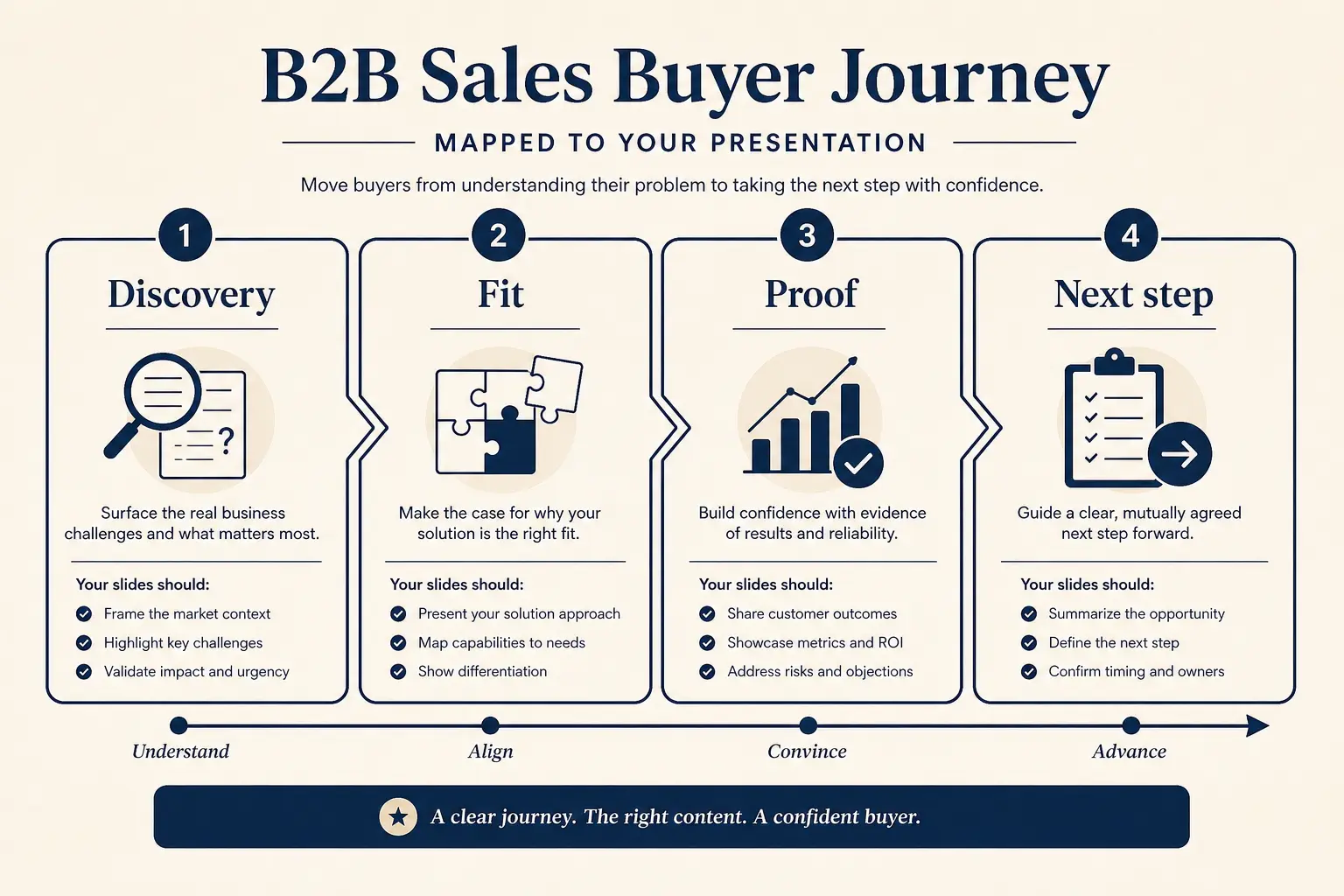
Buyer journey → slide map
Discovery
Pain + stakes
Fit
Why you win
Proof
ROI / risk
Next step
Clear ask
Structure that closes conversations
Open on their situation, not your founding story. Name the cost of the status quo in language they used on the call. Then show the capability that removes that cost, proof from similar buyers, commercial framing, and implementation reality. Close with mutual plan, who does what by when.
Feature catalogs belong in an appendix or enablement folder. In the room, every slide should survive the question: “Why does this matter to this account this quarter?” Mutual plans beat vague “next steps.” Name the economic buyer, the technical validator, the success metric for a pilot, and the date you will reconvene.
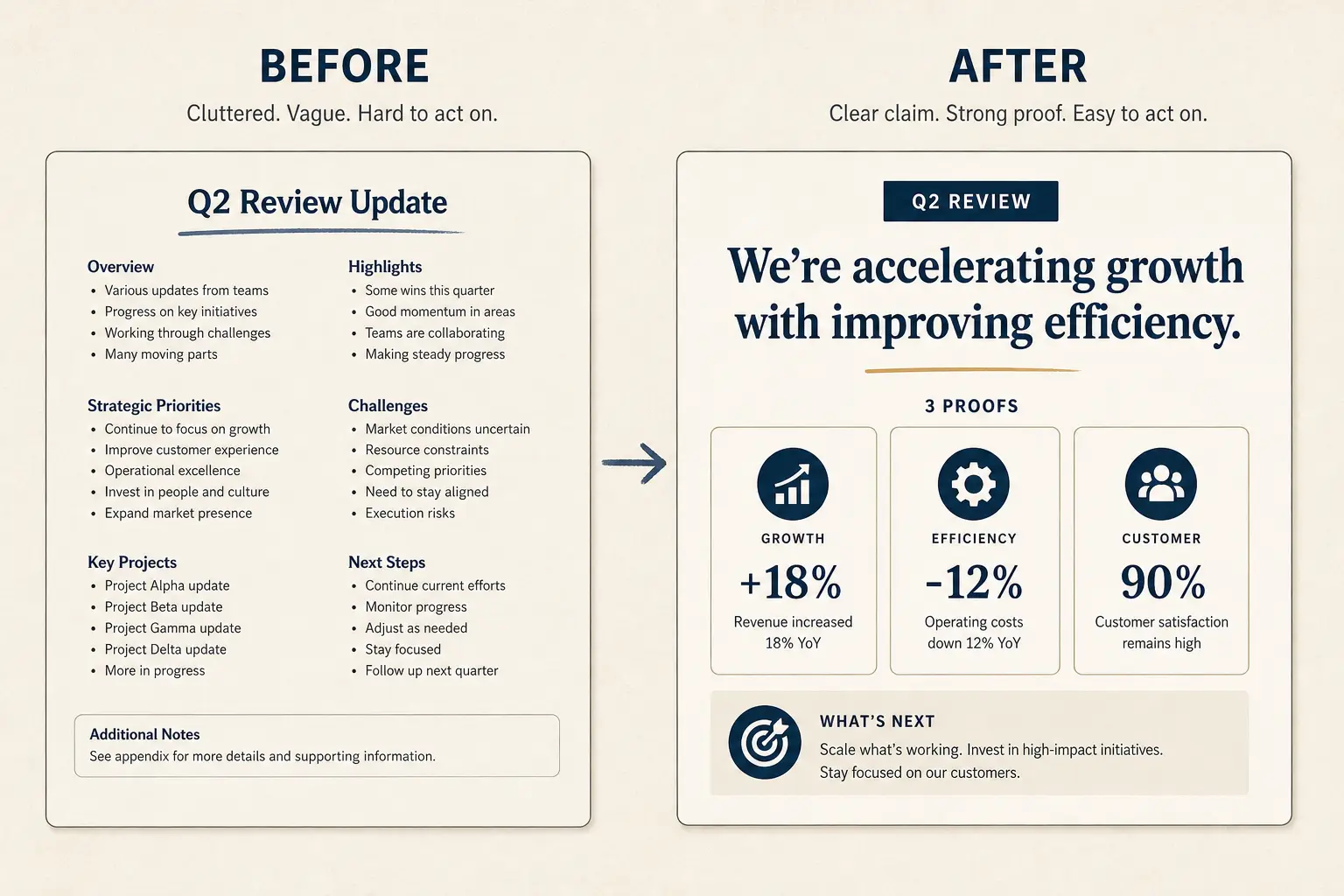
Anatomy of a claim slide
Claim headline (one idea)
Supporting line that states the so-what for this audience.
Source / footnote
Demo deck vs leave-behind
- Live demo deck, sparse, conversational, timed to the click path. Speaker notes carry detail.
- Leave-behind, denser proof, pricing context if appropriate, and objections answered in writing.
Sending your live demo slides as a PDF often fails both jobs. Decide which artifact you are building before you generate. Deep dive: demo vs leave-behind.
Slide density spectrum
Sparse
Live stage
1 claim, huge type
Balanced
Default
Claim + 3 proofs
Dense
Leave-behind
Detail for async read
ROI without fiction
ROI slides work when inputs are editable and assumptions are visible. Hard-coded miracle payback periods destroy trust. Show the levers the buyer controls, seats, hours saved, conversion lift, and let them argue the inputs. That argument is progress. See ROI slides that close.
Personalization at scale
The scalable unit is a strong master narrative plus account-specific swaps: industry language, their metric names, a logo, a relevant case, a mutual plan date. AI helps when it rewrites those slots from CRM or call notes, not when it invents a new story for every logo. Discovery facts should appear on slide one.
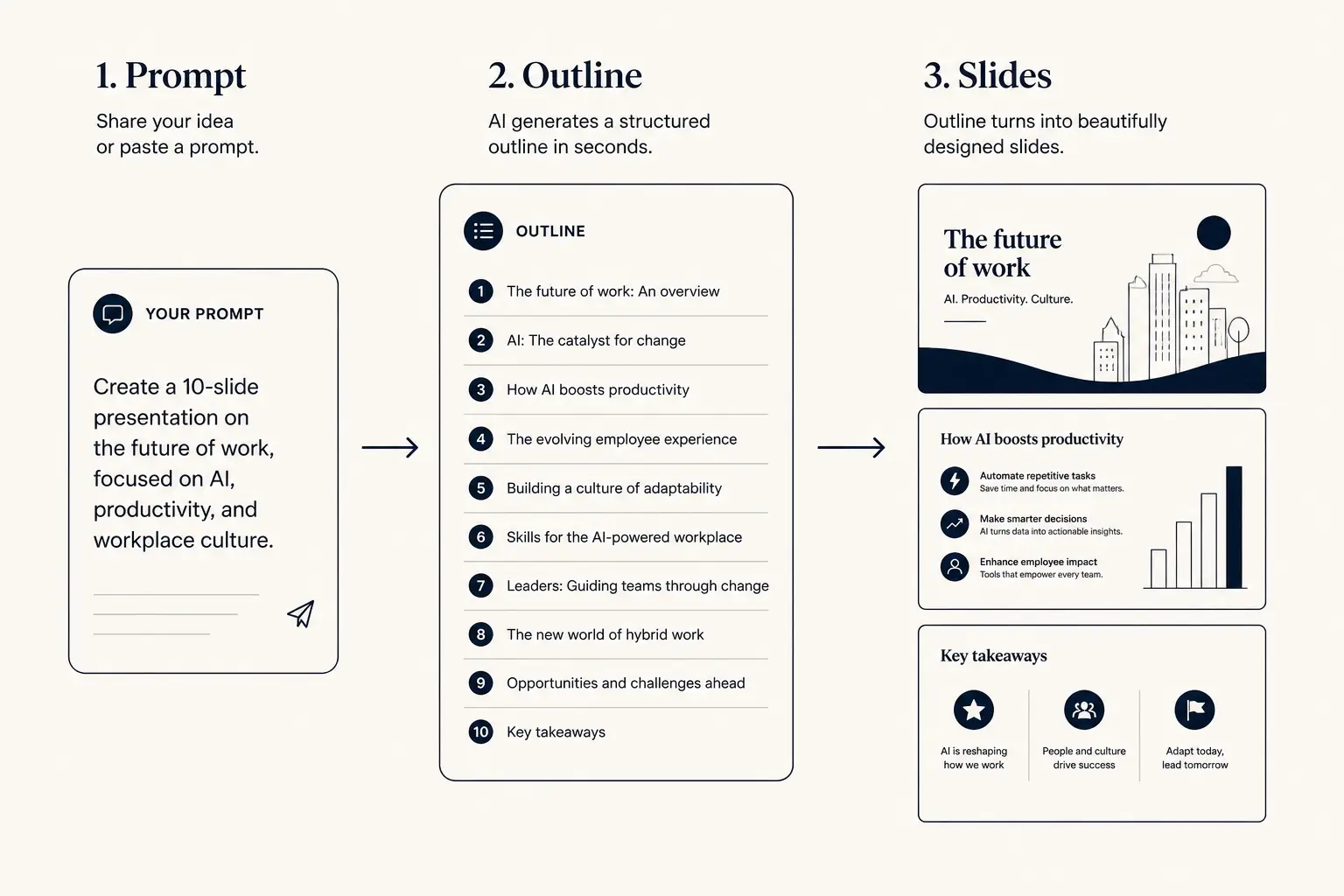
Prompt → outline → slides
1. Prompt
Audience, goal, length, proof you already have.
2. Outline
- • Opening claim
- • Proof beats
- • Ask / next step
3. Slides
Worked example: mid-market AE after discovery
Call notes say: “Manual reconciliations eat eight hours a week; last audit finding was ugly; budget owner is CFO; wants a two-week pilot.” Deck opens on the eight-hour cost and audit risk, shows wedge fit, ROI with editable hours and loaded cost, security objection with peer path, mutual plan dated for pilot kickoff. Feature grid moves to appendix. Present link for the demo; denser PDF leave-behind same day.
Meeting types need different modules
A first meeting deck is shorter and more diagnostic. A technical win room needs architecture and security depth. A commercial close needs pricing logic, implementation plan, and risk sharing. Recycling one master deck for all three trains buyers to tune out. Maintain a thin core narrative and swap modules.
Failure modes
- Opening on company history instead of buyer pain
- ROI with hidden assumptions
- Vague next steps without owners or dates
- Live-demo sparsity emailed as the only leave-behind
- Security objections parked in Q&A when they are real blockers
Not for you if…
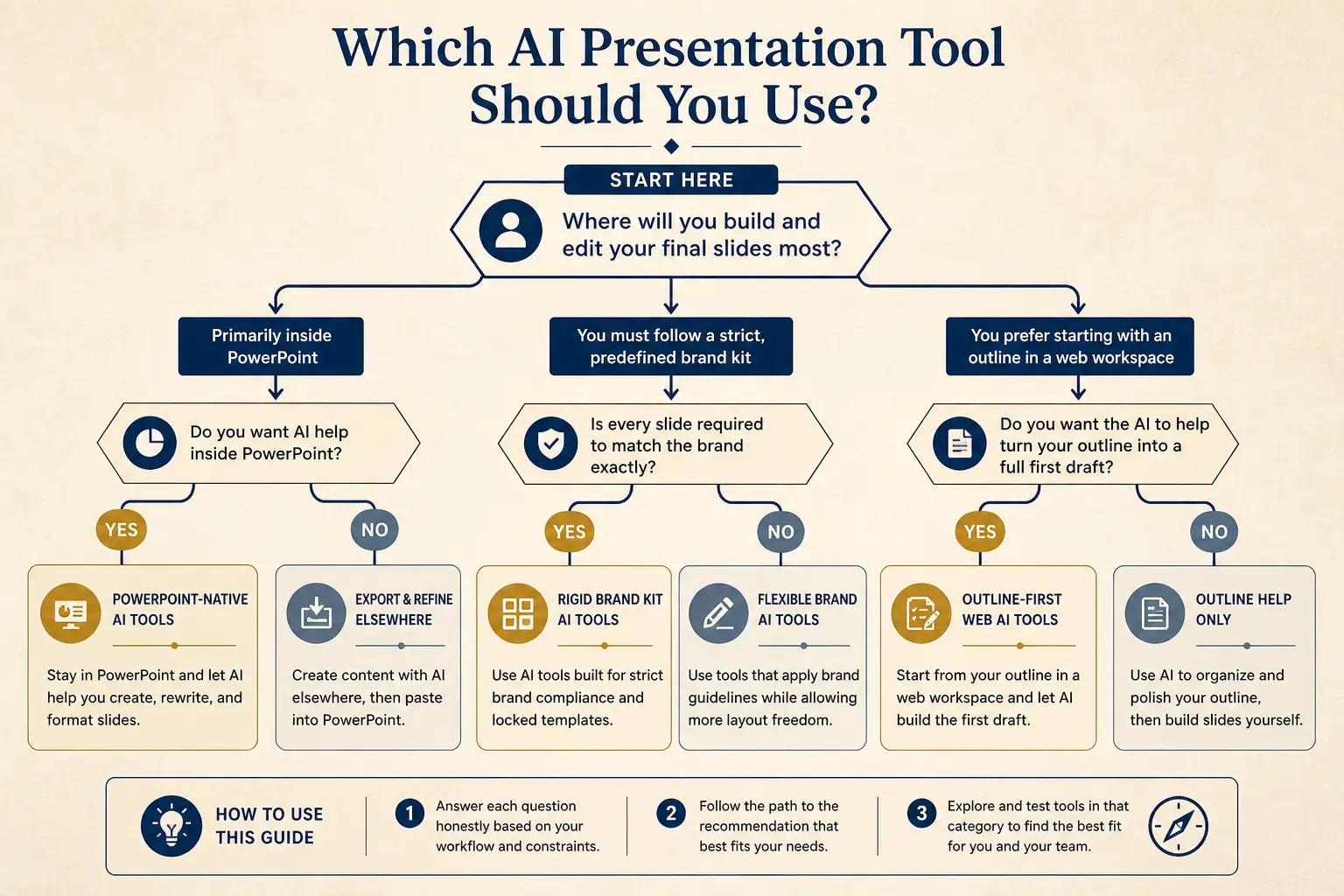
You need a one-page pricing sheet only, do not force a twelve-slide ritual. You sell through a partner who owns the narrative, align modules, do not generate a parallel story. You must live in PowerPoint daily for brand-locked edits, read compares; Gamma may still draft, then export.
Present link vs PPTX fidelity
Present link
- • Live latest edits
- • Best for your room
- • Analytics-friendly
Export PPTX / PDF
- • Offline / procurement
- • Brand review in PPT
- • Expect cleanup passes
Frameworks, worked rules, and cuts
Sales presentations close conversations when they continue discovery instead of reciting the website. Open on the buyer's status-quo cost in their language. Show the capability that removes that cost. Prove it with similar buyers. Make commercial logic inspectable. Close with a mutual plan that names owners and dates.
Original framework: Discovery-to-Mutual-Plan. Capture five bullets after every call: goal, decisions, metrics cited, owners, open questions. Those bullets become outline claims before any slide exists. If the bullets are wrong, layouts cannot save the meeting. AI rewrites slots from those bullets; it should not invent a new story for every logo.
Worked example: a mid-market ops leader said manual reconciliations eat eight hours a week, the last audit finding was ugly, the CFO owns budget, and they want a two-week pilot. The deck opens on eight-hour cost and audit risk, shows wedge fit, ROI with editable hours and loaded cost, security objection with a peer validation path, and a dated mutual plan. Feature grids move to the appendix.
Demo decks and leave-behinds are different artifacts. Live demos stay sparse and conversational with detail in speaker notes. Leave-behinds carry denser proof and written objection handling. Sending the live demo as the only PDF usually fails both jobs. Decide the artifact before you generate motion or dense tables.
ROI without fiction means editable inputs and visible assumptions. Miracle payback periods destroy trust. Let buyers argue seats, hours saved, and conversion lift. That argument is progress. Security, price, and we-already-have-a-tool objections deserve slides when they are real blockers, not a hope that Q and A will save you.
Failure modes include company-history openings, hidden ROI assumptions, vague next steps, live sparsity emailed as leave-behind, and one master deck recycled for first meeting, technical win, and commercial close. Maintain a thin core narrative and swap modules by meeting type so personalization stays cheap.
Not for you if you only need a one-page pricing sheet, if a partner owns the narrative entirely, or if rigid PowerPoint brand kits are the primary constraint every day. Read compares honestly. Gamma can still draft, then export, when file gravity wins, plan the cleanup budget instead of pretending export is invisible.
Concrete next step in Gamma: paste discovery language and the next step you want, generate an outline, put buyer pain on slide one, make ROI assumptions editable, and send a present link the same day with a denser leave-behind only after objections are answered. Measure success by mutual-plan clarity, not slide count.
Personalization at scale means a thin core narrative plus swap modules: industry proof, security path, pricing shape, mutual plan. Rebuild-from-zero for every logo is how teams ship late generic decks. Capture discovery bullets once; rewrite only the slots that changed.
Proposal presentations need commercial clarity: scope, assumptions, timeline, and decision date. Feature storytelling without commercial logic creates polite meetings that never close. Put the mutual plan where a champion can forward it without you narrating.
ROI slides that close let the buyer edit seats, hours, and conversion. Locked miracle math invites disbelief. Bring a second conservative scenario so finance can argue inside your model instead of rejecting the slide wholesale.
Security objection slides should validate the concern, show a peer path, and name the next proof artifact. Dismissive one-liners fail regulated buyers. If you lack a peer, say what you will provide in diligence rather than inventing a logo row.
First meeting, technical win, and commercial close are different densities. Reusing one master deck for all three forces either sparse leave-behinds or overstuffed demos. Keep modules labeled by meeting type and assemble in Gamma from the discovery bullets.
When file gravity wins and PPTX is mandatory, draft the argument in Gamma first, then export with a cleanup budget. Do not start in a rigid master if the story is still moving. Argument motion first; brand kit second, unless procurement has already frozen the opposite order.
Turn discovery notes into a sales draft
Paste the buyer’s language and the next step you want, edit before you send.